

The March Social Report
A lamb, a blanket, and a lesson for every brand still posting catalogue content. Here's what worked—and what didn't—across 50 Australian brands in March.

Welcome, welcome free subs 👋 It’s time again for another monthly report.
This month, I expanded the report to include a fifth category—Fitness. Including brands like KIC, Rebel Sport and LSKD—This category covers retailers, fitness centres and fitness apps.
This takes us to 50 Australian brands tracked over Instagram and TikTok!! This month, there were 3,552 posts across both platforms.
I’d love to continue expanding my reporting with new brands and new categories. Paid subscribers support this expansion, so if you can, your support would be greatly appreciated.
Paid subscribers also get early access to the monthly report, plus a TLDR deck that you can share with your marketing team. Additionally, I have added a Best Practice Guide for paid subscribers that collates all key learnings from monthly reports into one place.
If you’d like to support Sam on Socials, please consider becoming a paid or free subscriber ⭐️
The Top Ten
For the first time since I started this report, Beauty and Homewares have both made the top 10—without a competition post in sight.
Every previous month, the top 10 has been exclusively Fashion and Food. The brands that crack the top 10 are the ones making entertaining, platform-native content, and until now, that’s been a two-category monopoly.
In March, Lanolips’ World Sleep Day post (a video featuring a lamb, not a product) landed at number 6 with 188,366 total engagements. Adairs’ “Consider this the new business casual” Reel came in at number 10 with 87,062 likes, 766 comments, 116,002 shares and 1,405,542 views.
Adairs, if you are reading this, I really think I need one of these blankets, seriously what are they made from, clouds?
The full top 10, ranked by total engagement:
Nine out of 10 are videos. The exception is Grill’d’s carousel at number 5—the Oscar Piastri chicken burger reveal.
Fitness debuts with two posts in the top three, two of which are LSKD’s viral She runs, but she’s never just running campaign.
So you wanna go viral?
As you can see above, there are a few brands who’s videos reach stretched pretty far and wide in March. Three videos recorded over 100k shares—immediately doubling reach.
I’d consider this to be viral—and with some brands appearing more than once in the top 10, I was curious as to how much of a brand’s monthly performance comes from one or two posts.
In March, the answer was: a lot.
LSKD’s top post was 82% of their total monthly likes, across 90 posts. Lanolips’ sheep video was 90% of theirs across 64 posts—and that one post alone accounted for 47% of all Beauty & Self Care likes in March. Bed Threads’ top post was 89% of their month. Vegemite’s was 94%.
These aren’t brands without a content strategy—But in March, they were effectively one-post brands. Which raises a question.
Are they building content strategies, or are we hoping for lightning to strike in a teacup?
TikTok vs Instagram
TikTok has half the posts of Instagram this month, but nearly identical total likes—3.2M vs Instagram’s 3.3M.
On the surface that sounds like TikTok is twice as efficient. The averages support that: 2,609 likes per TikTok post vs 1,443 on Instagram. But the median tells a different story.
The typical TikTok post gets 150 likes. The typical Instagram post gets 230. The average is being dragged up by a tiny number of outliers.
The views picture reinforces this. TikTok generates 119.6M views vs Instagram’s 28.3M—more than 4x the reach from roughly half the posts.
But converting that reach to engagement is a different challenge entirely: TikTok requires 37.2 views per like, Instagram needs just 12.4. TikTok gets your content seen. Getting people to actually engage to it is much harder.
One category breaks from this pattern entirely: Fashion is the only category where TikTok outperforms Instagram on median likes—446 vs 350. Every other category has Instagram ahead, by margins ranging from 1.9x (Food) to 3.9x (Fitness). Fashion has cracked short-form video in a way no other category has.
Category Wrap Up
Fitness
Everyone please give a warm welcome to… Fitness!
This category features: LSKD, Muscle Nation, F45, KIC, Rebel Sport, Sweat, Stax, The Commons Health Club, Fitness First, and Coreplus.
A few housekeeping notes upfront. Five brands—Koala (Homewares, different category), Sweat, Rebel Sport, Coreplus, and Fitness First—have zero TikTok posts this month. They’ve all gone quiet on the platform, some since last year.
Perhaps, for good reason. The platform split in Fitness is also the most extreme of any category. IG median likes: 290. TikTok median likes: 44. That’s a 6.5x gap—compared to a cross-category average closer to 1.8x.
Interestingly, a few of these brands have public facing founders. KIC, Sweat and Stax’s founder-based content isn’t helping these brands as much as brands like all for mimi or Gem.
KIC and F45 are the quiet achievers. KIC: 44 posts, 211 median likes, community-driven content that doesn’t try too hard. F45: 50 posts, 470 median likes on Instagram—second highest IG median in the category after LSKD. Neither is doing anything flashy.
One last Fitness finding worth flagging: carousels outperform Reels on Instagram by the widest margin of any category—435 median likes vs 223.
Fitness audiences on Instagram are engaging with educational and training-related carousels in a way that other categories aren’t.
Fashion
Fashion generated 52% of all likes tracked across 50 brands and both platforms in March. From 40% of all posts.
Meshki and all for mimi together drove 78% of all Fashion likes from 24% of Fashion posts. Girls With Gems posted 304 times—the highest volume of any brand in the entire dataset—and generated 7% of Fashion likes. All For Mimi posted 119 times and generated 32%.
More posts does not mean more likes. It just means more posts.
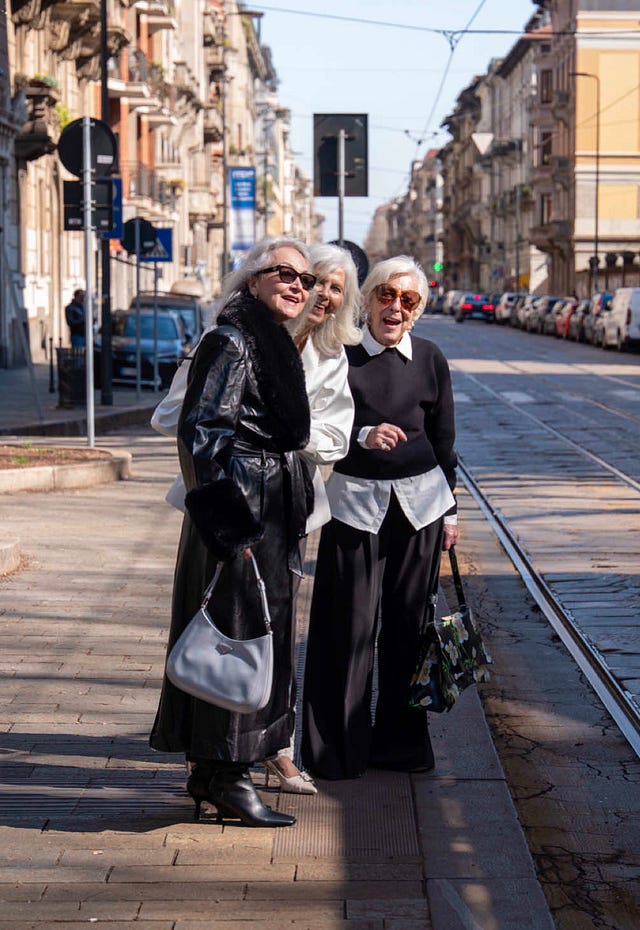
Meshki’s top content this month leaned hard into female friendship and hopecore—the “Tag those friends you want to grow old with” video featuring @sciuraglam was their biggest TikTok of the month at 690,400 likes.
 Tiktok failed to load.
Enable 3rd party cookies or use another browser
It’s worth reading the LinkedIn post I published last week for a full breakdown of why this post specifically worked so well. The short version: it was a masterclass in influencer selection, emotional resonance, and copy that prompts sharing.
Speaking of sharing—Fashion generated 435,162 TikTok shares in March. That’s 85% of every TikTok share tracked across all 50 brands. The other four categories combined: 77,964.
I’ve said it once, and I will probably say it a million more times—Shares and Saves are the most important engagement metrics. They indicate intention to discuss with friends or the want to come back to the content later.
If you’re like me, and will give your old high school a like on the worst photo you’ve ever seen—you’ll know that a like isn’t necessarily a meaningful form of engagement.
TikTok and Instagram are almost neck-and-neck in Fashion this month on median likes—446 TikTok vs 438 Instagram. Every other category has a clear platform winner. Fashion is genuinely platform-agnostic at the median right now, which is new.
Food & FMCG
Food punches above its weight again. 437 posts—second smallest category—but 967,000 total likes, second highest of any category.
Grill’d published 67 posts across the month, 25 of which were Oscar Piastri content. Those 25 posts drove 57% of Grill’d’s total March likes.
Median likes on Piastri posts: 976.
Non-Piastri: 281.
Posts featuring Oscar drove 247% more engagement.
The format matters here though. The starter pack posts were the clear winners—both the Instagram and TikTok versions cracked 100K likes.
The what’s in my bag TikTok? 1.5 million views, 6,206 likes.
That’s 242 views per like—among the worst conversion rates in the Grill’d dataset this month.
The content that actually performed was the content where Piastri felt like he was in on the joke, not just in the ad.
Beauty & Self Care
Lanolips had the top performing beauty post this month. If you feel like you haven’t heard me mention Lanolips much before, it’s because I haven’t.
Typically their social strategy is Paid UGC based—paid UGC is the worst performing video type brands are posting in 2026.
This month, their World Sleep Day post—a video featuring a cute little lamb dreaming, generated 185,384 likes and 924,000 views on Instagram.
This single post accounted for 47% of all Beauty & Self Care likes in March. Across 619 posts from 10 brands, one lamb did nearly half the category’s heavy lifting.
The rest of Lanolips’ month was ordinary. Which is the point. You can’t manufacture that kind of resonance, but you can create the conditions where it’s more likely to strike—content that’s warm, original, and brand-relevant without being a product pitch.
MECCA had a quieter month relative to February’s Rhode launch. 164 posts, 198 median likes, still the category leader by total volume and total likes.
24% of Beauty posts got fewer than 100 likes this month. Better than Homewares, but still—roughly 1 in 4 posts not reaching triple digits.
Beauty is also still the only category where IG outperforms TikTok by a meaningful margin (202 vs 68 median likes). The category hasn’t cracked short-form video the way Fashion and Food have.
Homewares & Lifestyle
Homewares median likes: 71 on Instagram, 27 on TikTok. Consistent with what we’ve seen since December.
Adairs made the top 10 for the first time—and it wasn’t a competition post, a brand partnership, or a heavily produced campaign.
Consider this the new business casual video drove 87,069 Instagram likes and 1.4 million views. And, it did well on TikTok too: 16,700 likes, 756,000 views.
Without this post, Adairs’ month looks very different. With it, they hold 59% of all Homewares likes.
The biggest shift in March is the one that should matter most to brands outside Fashion and Food: Beauty and Homewares both cracked the top 10 without a competition post. That hadn’t happened before.
Lanolips did it with a lamb. Adairs did it with a blanket. Neither post was a campaign post, required a celebrity, a major launch, or a paid push. They were just warm, original, brand-relevant content that people wanted to share.
That’s the throughline across all three months. January, February, March—the posts that travelled furthest weren’t the most produced, the most promoted, or the most frequent. They were the ones that felt like they were made for a person, not a sale.
Fashion and Food have known this for a while. In March, two other categories got a glimpse of what’s possible when you stop posting catalogue content and start making things worth sharing 👀
Methodology
This report analyses publicly available post-level social data across 50 brands and 5 categories captured throughout March 2026. It’s not possible to definitively separate organic from paid performance using publicly available data. Where paid amplification appears likely—very high views against very low engagement—I’ll flag it.
Brands Tracked — March 2026
Fashion: All For Mimi, Dissh, Fayt The Label, Girls With Gems, Glassons, Henne, Meshki, Mode Mischief, Target Australia, Vrg Grl
Beauty & Self Care: Adore Beauty, Gem, Go-To Skincare, Lanolips, MECCA, Priceline, Sephora Australia, Sundae Body, The Breakout Hack, Ultra Violette
Food & FMCG: Arnott’s Shapes, Boost Juice, Chatime, Fishbowl, Grill’d, Guzman Y Gomez, Messina, Remedy Drinks, Vegemite, Yo-Chi
Homewares & Lifestyle: 35mm Co, Adairs, Bed Threads, Hommey, I Love Linen, Kip & Co, Koala, Linen House, Sheet Society, Sheridan
Fitness & Wellness: Coreplus, F45, Fitness First, KIC, LSKD, Muscle Nation, Rebel Sport, Stax, Sweat, The Commons Health Club